Leveraging AI for Predictive Analytics & Forecasting in Modern Applications
Learn how AI-driven predictive analytics enhances forecasting, optimizes decision-making, and boosts efficiency across industries. Explore key use cases!

Imagine a bustling local coffee shop that’s been serving the same community for over a decade. The owner, Maria, always trusted her intuition to decide how much coffee to stock, when to expect rush hours, or which pastries to bake more of. Some days, she would sell out by 10 a.m., leaving customers disappointed. Other times, trays of unsold items went to waste. As the shop grew more popular and competition tightened, gut instinct was no longer enough. She needed a smarter, more consistent way to anticipate customer needs. That’s when she turned to predictive analytics.
Maria’s story is not unique. From small businesses to global enterprises, the need to forecast demand, understand trends, and prepare for the future has never been more critical. At the heart of this transformation is Artificial Intelligence (AI).
Introduction: Why Predictive Analytics Matters Today
In today’s data-driven world, businesses are no longer satisfied with reacting to events after they occur. They want to anticipate what's coming, act with foresight, and remain ahead of competitors. Predictive analytics empowers organizations to do just that. It involves using historical data, statistical algorithms, and machine learning techniques to identify the likelihood of future outcomes.
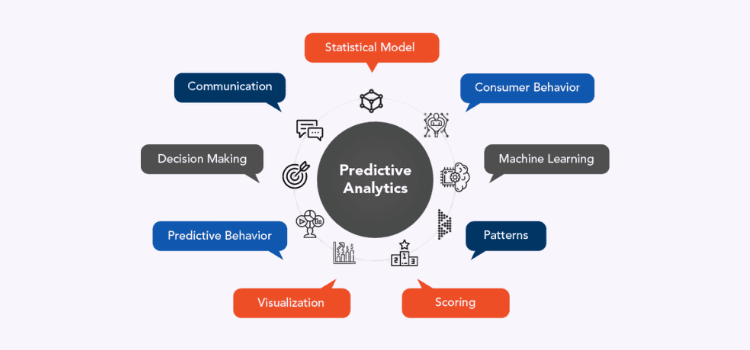
From anticipating customer churn to forecasting inventory demand, predictive analytics has become essential across industries. AI supercharges this capability by enabling systems to learn patterns, adapt over time, and deliver more accurate, scalable insights.
What is Predictive Analytics and Forecasting?
Predictive analytics is the practice of analyzing current and historical data to make predictions about future events. Forecasting, a subset of predictive analytics, focuses specifically on projecting numerical values into the future—such as sales figures, demand levels, or temperature readings.
Traditionally, businesses relied on simple statistical models like linear regression or ARIMA for forecasting. While these methods are useful, they often fall short in handling complex, non-linear, or high-volume data. That’s where AI comes in.
How AI Enhances Predictive Capabilities
AI brings a new level of sophistication to predictive analytics. Here’s how:
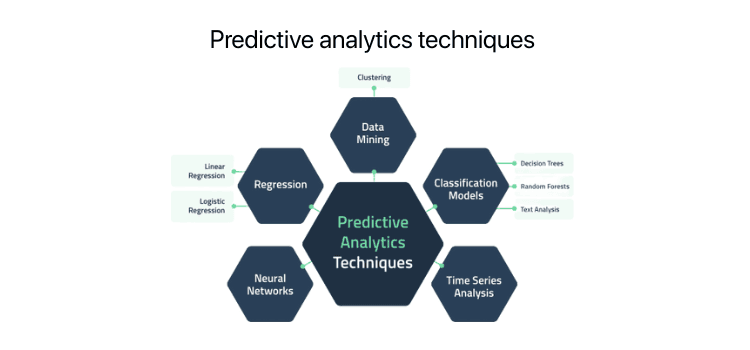
Machine Learning Models:
Algorithms like decision trees, random forests, and gradient boosting machines learn patterns from vast datasets to predict outcomes. These models improve over time as more data becomes available.
Deep Learning for Time Series:
Neural networks such as LSTMs (Long Short-Term Memory) and Transformers can capture sequential dependencies, making them ideal for time series forecasting.
Probabilistic Forecasting:
Instead of a single outcome, AI models can provide probability distributions, helping decision-makers understand uncertainty and risk.
Real-Time Insights:
AI systems can process streaming data to make continuous predictions, crucial for applications like fraud detection or **supply chain optimization.
**
Real-World Applications Across Industries
Retail: Forecasting product demand to optimize inventory and reduce waste.
Healthcare: Predicting patient admission rates or disease progression for better resource planning.
Finance: Anticipating credit default risks, stock movements, or fraud patterns.
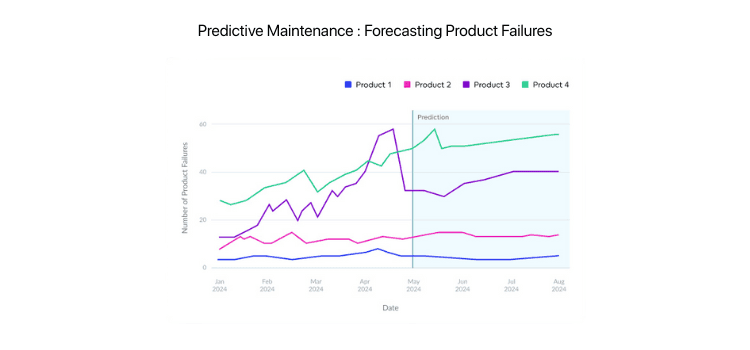
Manufacturing: Predicting equipment failure and maintenance needs to reduce downtime.
Logistics: Forecasting delivery times and optimizing route planning in real time.
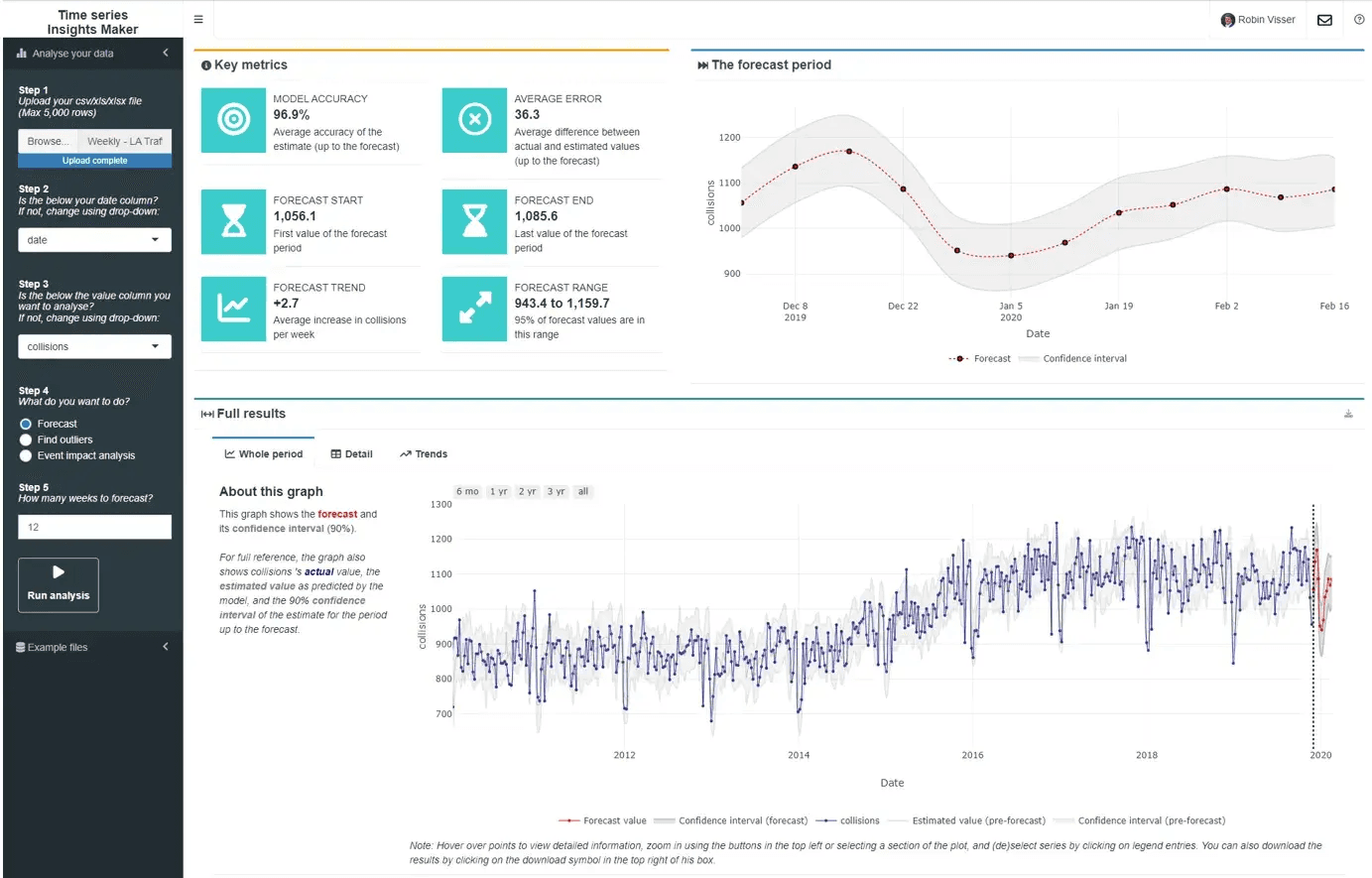
Here’s a simple dashboard which will give a fair context on what kind of info you can expect in these domains.
System Architecture for AI-Powered Forecasting
A typical AI forecasting pipeline involves the following stages:
Data Collection: Ingesting data from internal systems, sensors, or external APIs.
Preprocessing: Cleaning, transforming, and engineering features from raw data.
Model Training: Choosing and training appropriate models using historical data.
Validation & Testing: Evaluating model performance and tuning hyperparameters.
Deployment: Integrating the model into applications via APIs or dashboards.
Monitoring & Retraining: Continuously evaluating performance and updating the model with new data.
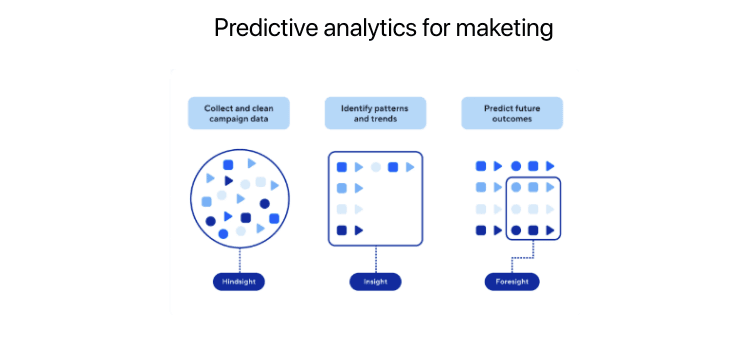
Can be understood with the help of a simple diagram.
Popular platforms supporting this pipeline include AWS Forecast, Google Cloud Vertex AI, Azure ML, and open-source tools like Prophet, Darts, and TensorFlow.
Some Common Forecasting Models and Formulas
Linear Regression:
A basic statistical method where the future value (Y) is predicted based on the relationship with an independent variable (X):
Use Case: Estimate future revenue based on marketing spend.
How to Use: Gather historical data (e.g., past marketing spend and revenue), use statistical libraries (like scikit-learn) to fit the model, and apply it to forecast future revenue.
ARIMA (AutoRegressive Integrated Moving Average):
Combines autoregression (AR), differencing (I), and moving average (MA):
Use Case: Forecast time series data with trends (e.g., monthly product sales).
How to Use: Use Python's statsmodels library, test different ARIMA parameters (p, d, q), train the model, and make forecasts. The model requires stationarity, which is often achieved through differencing.
Exponential Smoothing (ETS):
Prioritizes recent observations more heavily. A simple model is:
Use Case: Smooth out daily website traffic for near-term predictions.
How to Use: Choose a smoothing factor (between 0 and 1), or let libraries like statsmodels.tsa.holtwinters optimize it automatically. This model is useful for short-term, stable patterns.
Challenges in AI Forecasting
While powerful, implementing AI forecasting isn’t without its hurdles:
Data Quality: Inaccurate or incomplete data can severely impact model performance.
Concept Drift: Models trained on past data may become outdated as conditions change.
Interpretability: Black-box models can be hard to explain to stakeholders.
Scalability: Real-time systems require robust infrastructure and efficient algorithms.
Best Practices for Implementation
Start with the Business Problem: Define clear goals before choosing models.
Collaborate Cross-Functionally: Engage domain experts, data engineers, and product teams.
Build for Iteration: Forecasting models should be updated frequently.
Ensure Explainability: Use techniques like SHAP or LIME to build trust.
Monitor Continuously: Set up alerting and retraining pipelines.
The Future: Generative AI and Autonomous Forecasting Agents
The next frontier lies in combining predictive models with generative AI. Instead of just predicting the future, systems can simulate multiple scenarios, provide reasoning behind forecasts, and even recommend actions. Large Language Models (LLMs) can complement time series models by interpreting context, external events, and business rules.
Imagine a system that not only predicts a spike in demand but also drafts an email to suppliers, updates the procurement system, and informs customer support to prepare for increased inquiries. That’s the power of autonomous forecasting agents.
Conclusion
AI has transformed predictive analytics from a niche statistical practice into a strategic advantage. Whether you are running a coffee shop or managing a global supply chain, the ability to anticipate future events accurately can drive efficiency, reduce costs, and delight customers.
As tools become more accessible and models grow more powerful, the real question is no longer if businesses should adopt AI for forecasting but how quickly they can do so.
Now is the time to move from reactive to proactive. The future is waiting to be predicted.